A devastating inferno has engulfed British Columbia, forcing the evacuation of around 15,000 homes, as ferocious wildfires wreak havoc and consume properties in their path.
The city of West Kelowna, with a population of 36,000, faced a catastrophic onslaught, with a “significant” number of buildings devoured by flames. More than 2,400 homes had to be evacuated.
Amidst the chaos, a state of emergency has been declared for the entire province, grappling with the onslaught of hundreds of separate blazes.
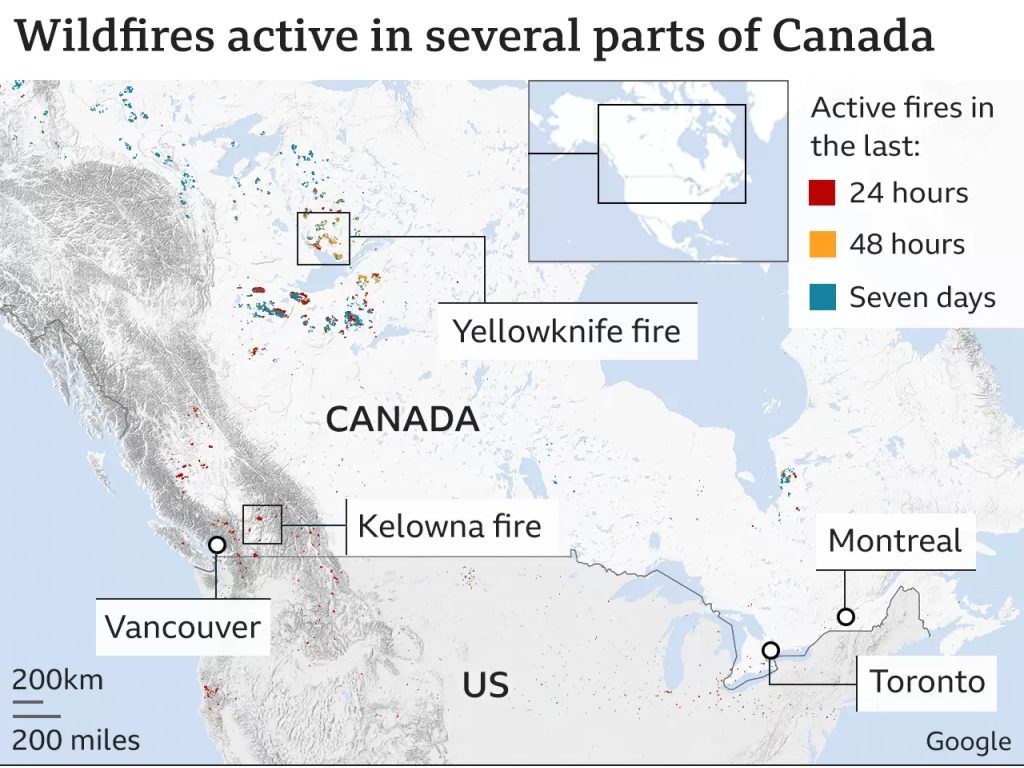
In a separate horror unfolding hundreds of miles away, a colossal firestorm advances menacingly towards Yellowknife, the capital of Canada’s Northwest Territories.
Though the official evacuation deadline for Yellowknife has elapsed, almost all of the city’s residents have heeded the call to flee, either by car or plane. Of its 20,000 inhabitants, nearly 19,000 have evacuated, shared Shane Thompson, the territories’ environment and communities minister.
As the wildfire threat engulfs the region, Thompson warned of the potential disruption to highways and the airport.
In British Columbia, evacuation orders escalated dramatically, encompassing 4,000 homes on Friday afternoon and suddenly surging to impact around 15,000 homes within an hour. An additional 20,000 homes remain on high alert.
Premier of the province, David Eby, characterized the situation as one that has “evolved rapidly,” anticipating an “extremely challenging situation in the days ahead.”
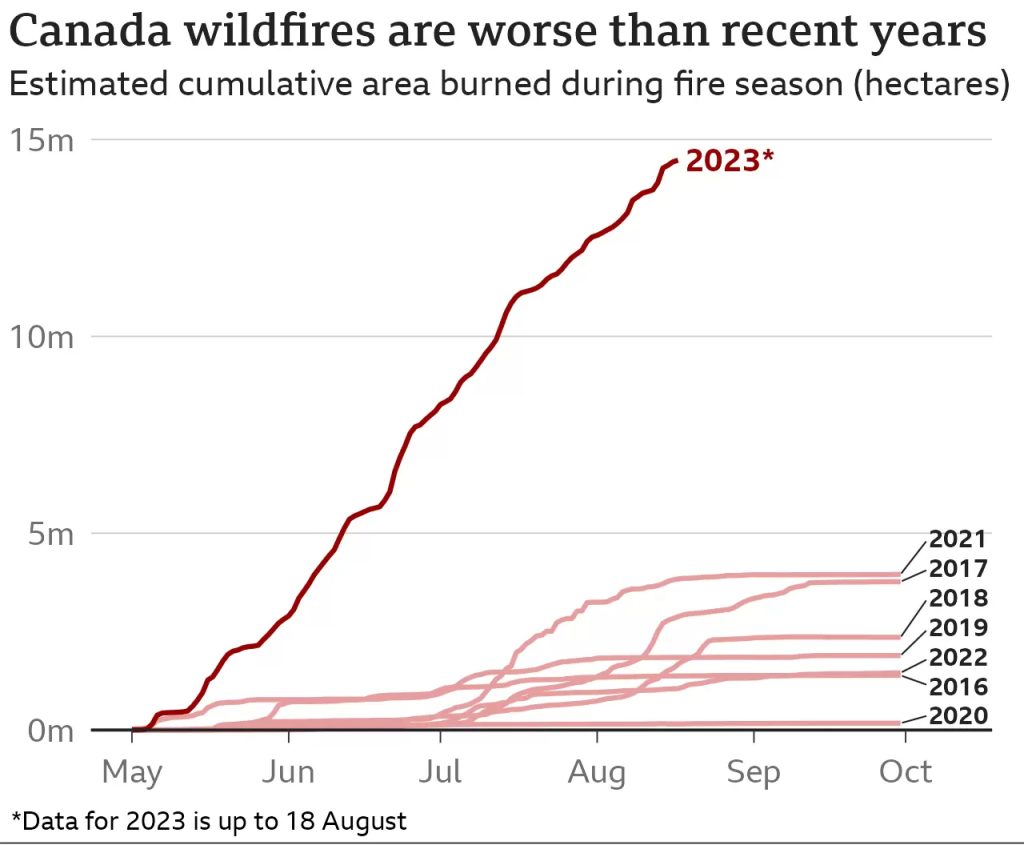
In response, Eby declared a provincial state of emergency, asserting, “This year, we’re facing the worst #BCWildfire season ever.” He added, “Given these fast-moving conditions, we are declaring a provincial state of emergency.”
This declaration, he emphasized, would ensure quick access to necessary tools to support affected communities. Eby’s warning echoed far and wide as the evacuation efforts intensified, cautioning that “emergency orders could include travel restrictions to specific areas if people do not respect our calls to avoid non-essential travel.”
Canada is enduring its most devastating wildfire season on record, with over 1,000 fires scorching the nation, according to the Canadian Interagency Forest Fire Centre.
Environmental experts emphasize that climate change has amplified the threat of hot, arid conditions conducive to wildfires. Prolonged heat and extreme dryness sap moisture from the earth, transforming it into a volatile fuel that can ignite and spread with exceptional speed, especially when fueled by strong winds.
Jason Brolund, West Kelowna’s fire chief, encapsulated the terror, calling the wildfire “devastating.” He recounted the valiant efforts to protect the community, battling fires that amounted to a century’s worth in a single night.
Tragic reports of “significant structural loss” have emerged from the region, particularly Trader’s Cove, located just north of West Kelowna.
Despite the chaos, no fatalities have been reported thus far.
Juliana Loewen, a resident of Kelowna, described the harrowing scene as a “plume of smoke” veiled the mountainside, appearing like an “ominous cloud of destruction.” Locals recounted jumping into the lake as flames encroached and escape routes were cut off.
The climate in the area, known for its “California-style climate,” makes residents accustomed to wildfires, but the extreme heat, dryness, and winds of recent days have created the “perfect conditions for a firestorm,” Loewen explained.
Amidst the chaos, Kelowna International Airport’s airspace has been cordoned off, reserved exclusively for aerial firefighters battling the relentless blaze.


